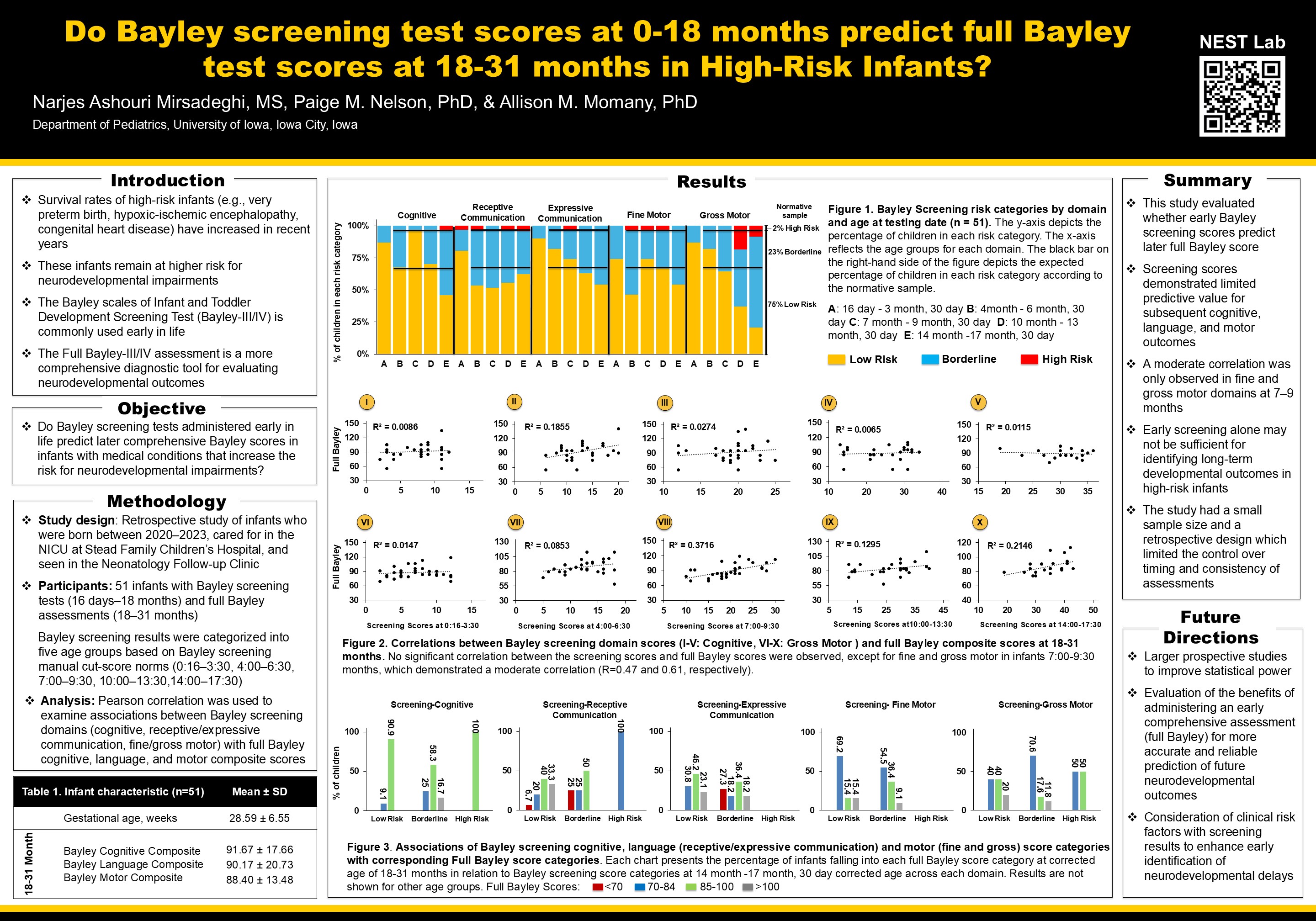
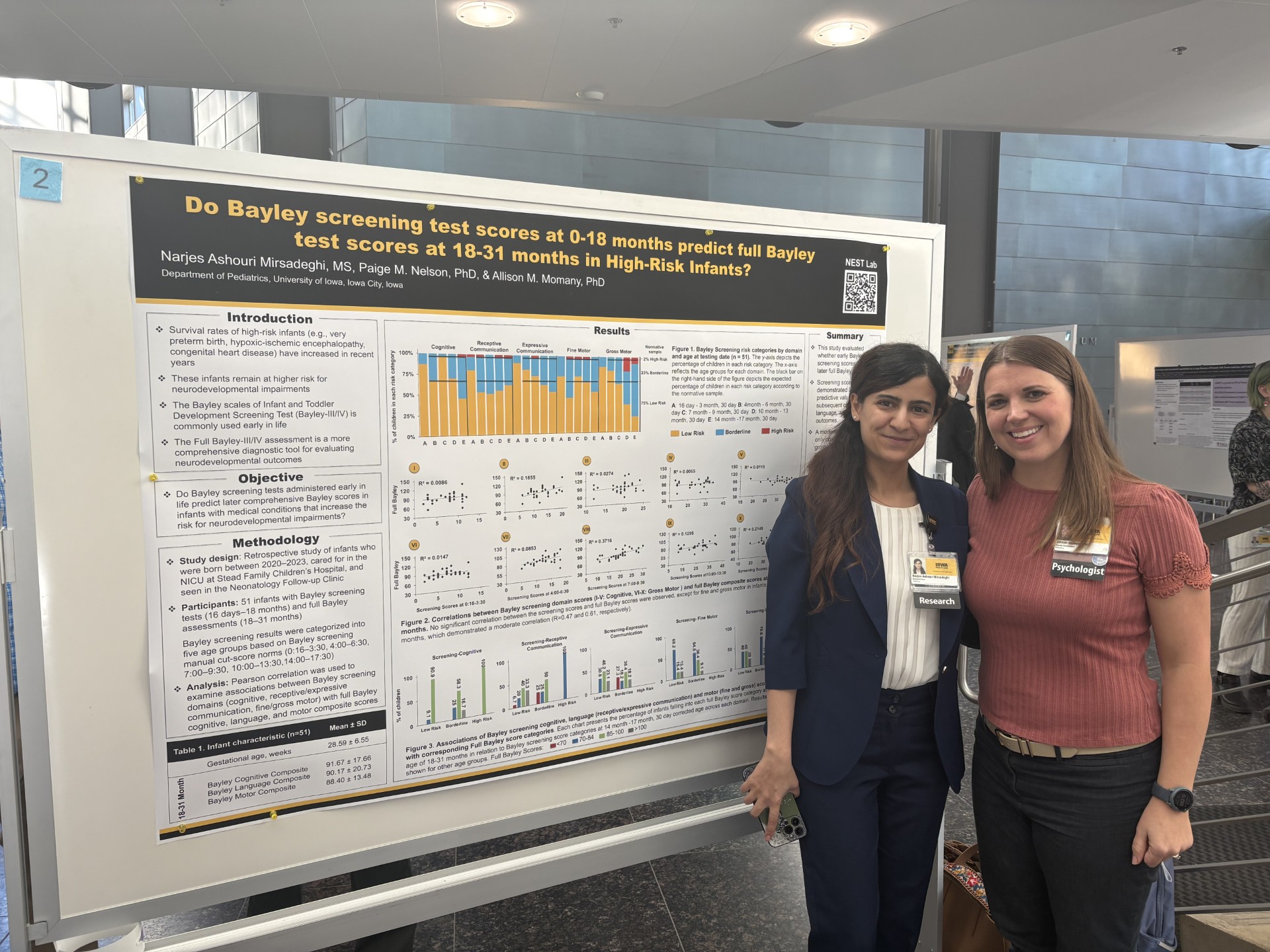
Introduction: Survival rates of high-risk infants (e.g., very preterm birth, hypoxic-ischemic encephalopathy, congenital heart disease) have increased in recent years. These infants remain at higher risk for neurodevelopmental impairments. The Bayley scales of Infant and Toddler Development Screening Test (Bayley-III/IV) is commonly used early in life; However, the Full Bayley-III/IV assessment is a more comprehensive diagnostic tool for evaluating neurodevelopmental outcomes.
Objective: Do Bayley screening tests administered early in life predict later comprehensive Bayley scores in infants with medical conditions that increase the risk for neurodevelopmental impairments?
Methodology: This was a retrospective study of infants who were born between 2020-2023, cared for in the NICU at Stead Family Children's Hospital, and seen in the Neonatology Follow-up Clinic. This comprised of 51 infants with Bayley screening tests (16 days–18 months) and full Bayley assessments (18–31 months). Bayley screening results were categorized into five age groups based on Bayley screening manual cut-score norms (0:16–3:30, 4:00–6:30, 7:00–9:30, 10:00–13:30,14:00–17:30). Pearson correlation was used to examine associations between Bayley screening domains (cognitive, receptive/expressive communication, fine/gross motor) with full Bayley cognitive, language, and motor composite scores.
Findings: This study evaluated whether early Bayley screening scores predict later full Bayley scores. Screening scores demonstrated limited predictive value for subsequent cognitive, language, and motor outcomes. A moderate correlation was only observed in fine and gross motor domains at 7–9 months. Early screening alone may not be sufficient for identifying long-term developmental outcomes in high-risk infants. The study had a small sample size and a retrospective design which limited the control over timing and consistency of assessments.
Future Directions: Larger prospective studies may improve statistical power. Studies may evaluate the benefits of administering an early comprehensive assessment (full Bayley) for more accurate and reliable prediction of future neurodevelopmental outcomes. Consideration of clinical risk factors with screening results may enhance early identification of neurodevelopmental delays.