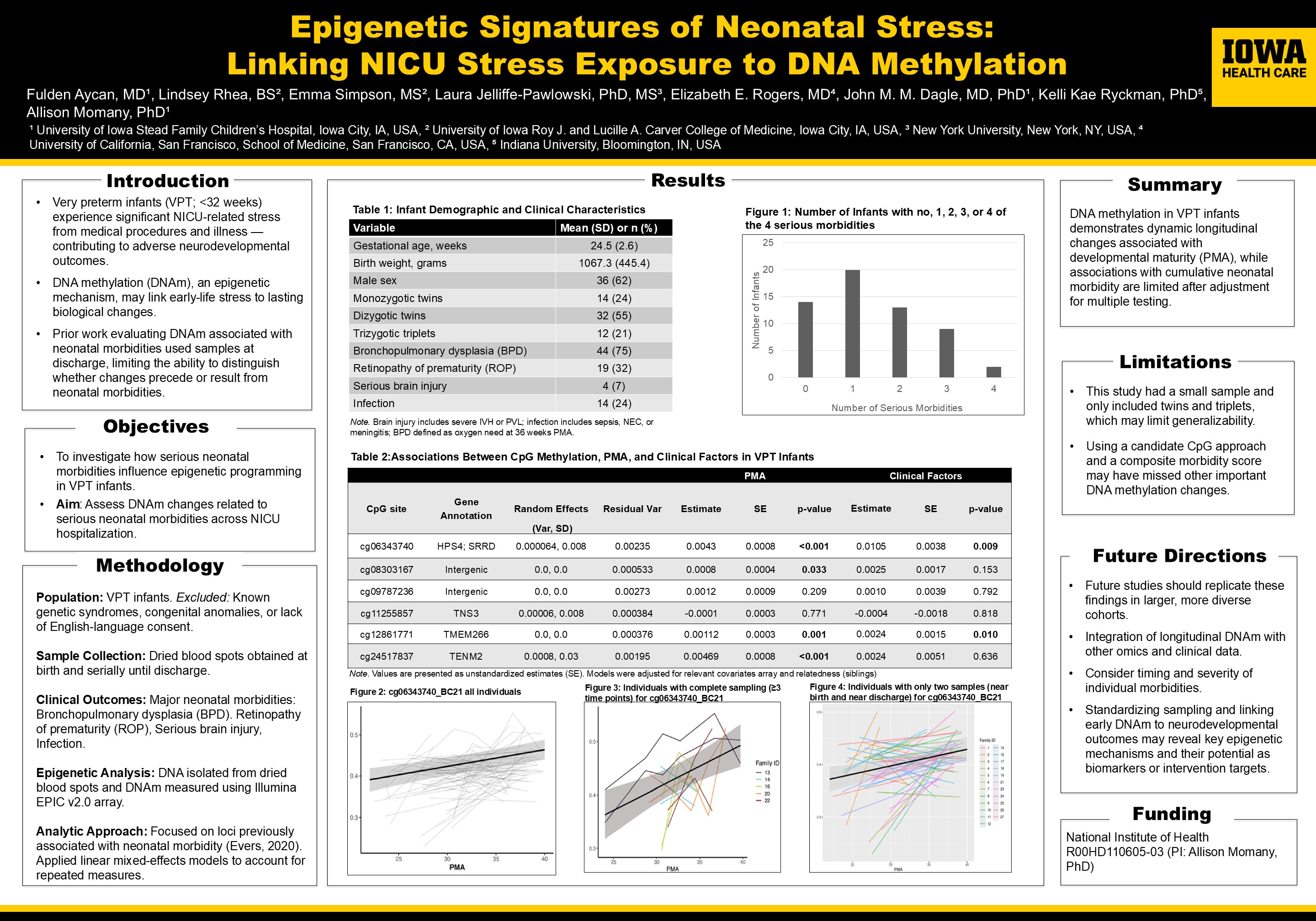
Introduction: Very preterm infants (VPT; <32 weeks) experience significant NICU-related stress from medical procedures and illness —contributing to adverse neurodevelopmental outcomes. DNA methylation (DNAm), an epigenetic mechanism, may link early-life stress to lasting biological changes. Prior work evaluating DNAm associated with neonatal morbidities used samples at discharge, limiting the ability to distinguish whether changes precede or result from neonatal morbidities.
Objectives: To investigate how seriously neonatal morbidities influence epigenetic programming in VPT infants.
Aim: Assess DNAm changes related to serious neonatal morbidities across NICU hospitalization.
Methodology: Dried blood spots were obtained from VPT infants at birth and serially until discharge. DNA was isolated from the spots and DNAm was measured using Illumina EPIC v2.0 array. Analysis was focused on loci previously associated with neonatal morbidity, and linear mixed-effects models were applied to account for repeated measures. The Clinical outcomes examined were Bronchopulmonary Dysplasia (BPD), Retinopathy of Prematurity (ROP), serious brain injury, and infection.
Findings: DNA methylation in VPT infants demonstrates dynamic longitudinal changes associated with developmental maturity (PMA), while associations with cumulative neonatal morbidity are limited after adjustment for multiple testing.
Limitations: This study had a small sample and only included twins and triplets, which may limit generalizability. Using a candidate CpG approach and a composite morbidity score may have missed other important DNA methylation changes.
Future Directions: Future studies should replicate these findings in larger, more diverse cohorts.
Integration of longitudinal DNAm with other omics and clinical data should be explored. Studies might consider timing and severity of individual morbidities. Lastly, standardizing sampling and linking early DNAm to neurodevelopmental outcomes may reveal key epigenetic mechanisms and their potential as biomarkers or intervention targets.