
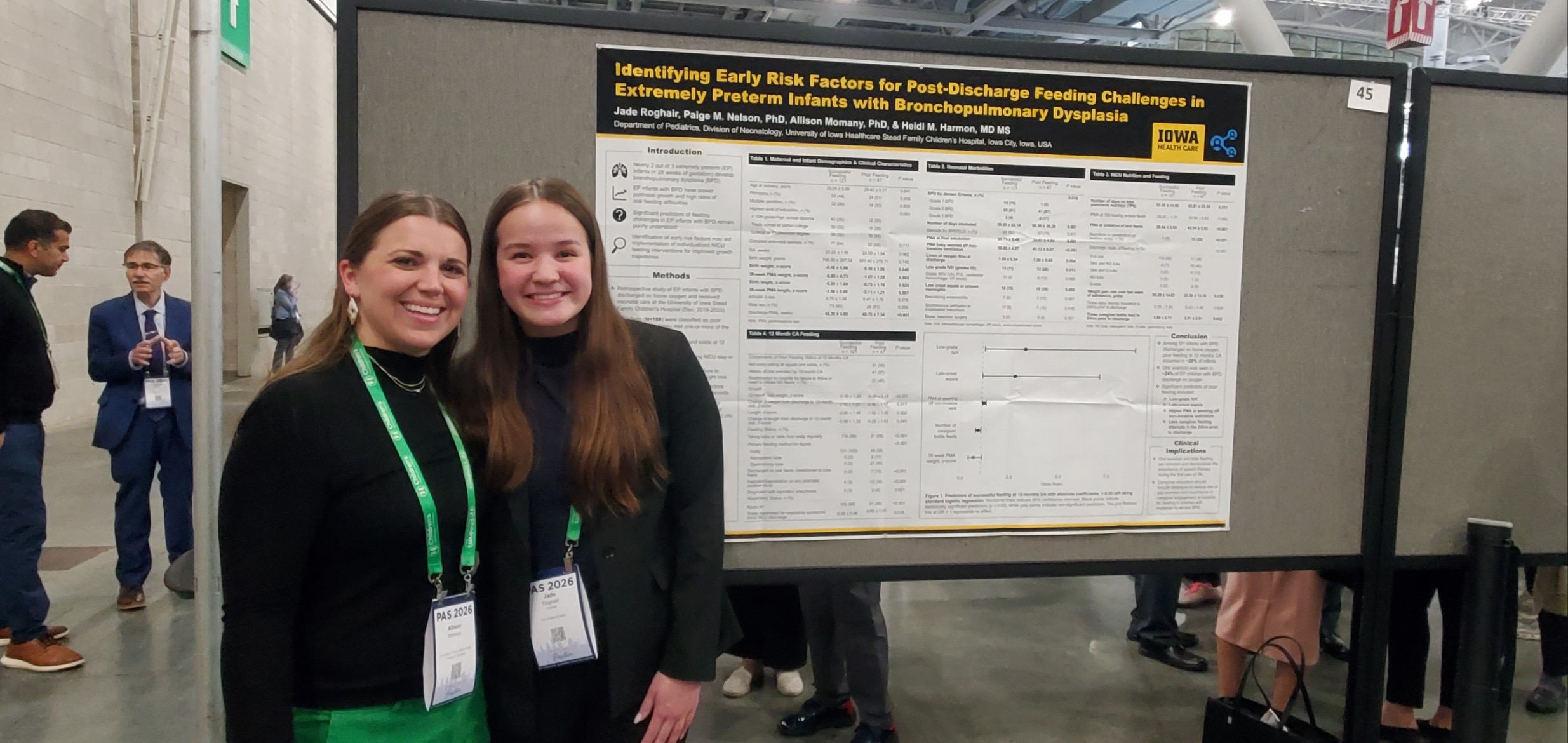
Background: Nearly 2 out of 3 extremely preterm (EP) infants (< 28 weeks of gestation) develop bronchopulmonary dysplasia (BPD). EP infants with BPD have slower postnatal growth and high rates of oral feeding difficulties. Significant predictors of feeding challenges in EP infants with BPD remain poorly understood. Identification of early risk factors may aid implementation of individualized NICU feeding interventions for improved growth trajectories.
Design/Methods: We formulated a retrospective study of EP infants with BPD discharged on home oxygen and received neonatal care at the University of Iowa Stead Family Children's Hospital (Dec. 2018-2023). Early neonatal risk and 12-month CA factors were collected from electronic medical records. Group comparisons were made of successful and poor feeders at 12 months CA using independent samples t-tests for continuous variables and chi square tests or Fisher’s Exact tests for categorical variables.
Results: Among EP infants with BPD discharged on home oxygen, poor feeding at 12 months CA occurred in ~28% of infants. Oral aversion was seen in ~24% of EP children with BPD discharge on oxygen. Significant predictors of poor feeding included: low-grade IVH, late-onset sepsis, higher PMA at weaning off non-invasive ventilation, and less caregiver feeding attempts in the 24hrs prior to discharge.
Conclusion: Oral aversion and tube feeding are common and demonstrate the importance of speech therapy during the first year of life. Caregiver education should include strategies to reduce risk of oral aversion and importance of caregiver engagement at bedside for feeding in children with moderate-to-severe BPD.